
Helping Older Adults Retire Well and Live Longer at Home
Begins With Reducing Their Technology Airtime
Older adults want what everyone wants in retirement: independence, dignity, connection, and the ability to live at home for as long as possible. Yet one of the most overlooked barriers to achieving this is hiding in plain sight — Technology Airtime, the hours spent wrestling with screens, apps, notifications, and digital friction that drain energy, attention, and confidence.
For older adults, reducing Technology Airtime isn't just a lifestyle improvement. It's a longevity strategy, a mental‑health booster, and a pathway to safer, calmer, more independent living.
The Hidden Cost of Technology Airtime
Smartphones were never designed for older adults. They were designed for speed, multitasking, and constant engagement — three things that become more burdensome, not easier, with age.
Excessive Technology Airtime creates challenges that directly affect an older adult's ability to live independently: cognitive overload from complex interfaces; stress and frustration from constant updates, alerts, and app changes; reduced physical activity due to screen‑based habits; isolation when technology becomes too difficult to manage; and safety risks when essential communication tools feel confusing or unreliable.
Every hour spent troubleshooting a phone is an hour not spent connecting with family, enjoying hobbies, or maintaining healthy routines.
Why Reducing Technology Airtime Helps Older Adults Stay at Home Longer
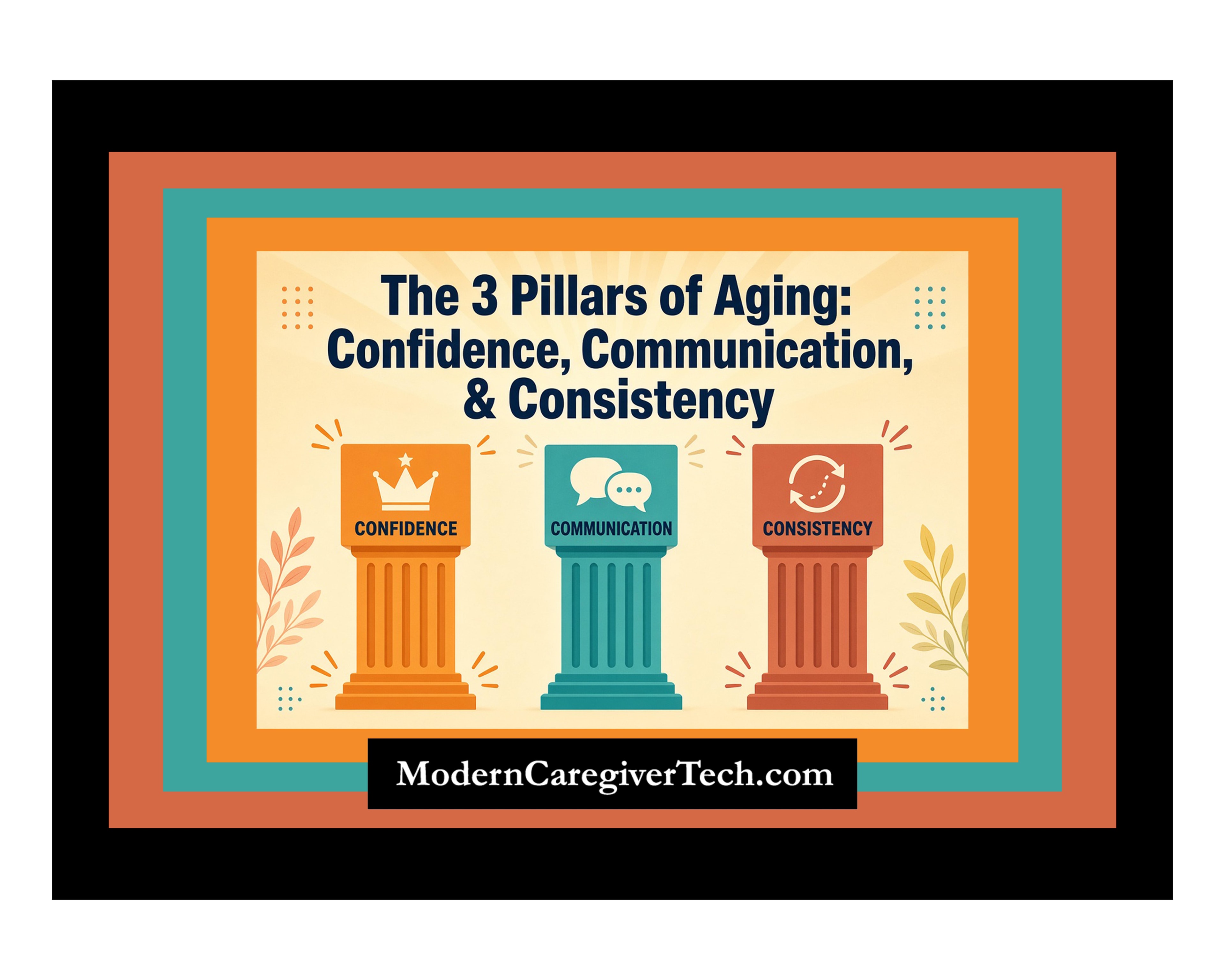
Living at home successfully depends on three pillars: Confidence, Communication, and Consistency. Lowering Technology Airtime strengthens all three.
1. Confidence Through Simplicity — When technology becomes simpler, older adults feel more capable. They navigate daily tasks without fear of "breaking something," and they stay engaged with the world instead of withdrawing from it.
2. Better Communication With Less Effort — Communication is the lifeline of aging in place. But smartphones complicate it with taps, swipes, menus, and visual clutter. Reducing Technology Airtime means shifting to tools that make communication effortless — especially voice‑first tools.
3. More Time for Healthy Routines — Less screen time means more movement, more sunlight, more social interaction, and more mental clarity. These are the real drivers of longevity.
The Shift: From Smartphones to Voice‑First Living
The future of aging in place is not about adding more apps — it's about removing friction.
Voice‑first technology, especially AI glasses and AI Speakers (both formally called Smart Glasses and Smart Speakers), is emerging as the next major step in helping older adults live independently. Instead of staring at a screen, older adults can simply speak and listen: make a phone call, send a message, get reminders, ask questions, control home devices, access information, and navigate daily tasks — all without tapping, swiping, or searching.
This shift dramatically reduces Technology Airtime while increasing ease, safety, and peace of mind.
Aging in Place Is Becoming a National Movement
Across the country, families, caregivers, and senior‑care organizations are rallying around one shared goal: help older adults live at home for as long as possible.
This movement is reshaping how we think about retirement: more home‑based care, more remote monitoring, more voice‑first tools, more AI‑powered support, and less dependence on smartphones.
Replacing the smartphone with AI glasses for communication — phone calls, text messaging, reminders, and daily assistance — creates a calmer, more intuitive experience. It reduces Technology Airtime and gives older adults a sense of control that screens often take away.
The Path to a Longer, Happier Life at Home
Helping older adults retire well and stay home longer starts with one simple idea: Reduce the technology burden. Increase the human experience.
When older adults spend less time fighting with screens and more time living, everything improves: their health, their confidence, their independence, their relationships, and their daily joy.
Technology should serve older adults — not overwhelm them. Lowering Technology Airtime is the first step toward a retirement that feels peaceful, connected, and full of life.
The Ben Franklin Movement: Inventing the Future by Reducing Technology Airtime
As we look toward the future of aging in America, a new cultural shift is emerging — one that aligns perfectly with the mission of helping older adults live longer, happier lives at home. It's called The Ben Franklin Movement, a modern call to return to clarity, purpose, invention, and human-centered living.
Inspired by Franklin's belief that progress should serve people — not overwhelm them — the movement champions a simple but transformative idea: We invent the future by reducing Technology Airtime.
The Ben Franklin Movement recognizes that the greatest breakthroughs in modern aging won't come from bigger screens, louder notifications, or more complicated apps. They will come from designing technology that disappears into the background, allowing older adults to live fully in the foreground of their own lives.
It encourages families, caregivers, and communities to rethink how technology fits into daily living: less staring at screens, more speaking and listening, less digital clutter, more human connection, less confusion, and more confidence, communication, and consistency.
The movement celebrates tools like the ICC, AI speakers, and AI glasses — not because they are futuristic, but because they restore something timeless: the ability to live simply, safely, and independently.
Just as Franklin believed in practical inventions that improved everyday life, the Ben Franklin Movement believes the future of aging will be built on technologies that reduce friction, reduce stress, and reduce Technology Airtime — while increasing dignity, independence, and joy.
It's a movement for older adults. It's a movement for caregivers. It's a movement for families. And it's a movement for anyone who believes the future should feel more human, not more overwhelming.
Aging well in the 2020s and beyond isn't about using more technology — it's about using the right technology. The Ben Franklin Movement reminds us that when we simplify the digital world, we expand the real one. And in that expanded world, older adults can retire well, live longer at home, and enjoy a life filled with clarity, connection, and purpose.
Wishing you the best,
— Patrick J. Fischer
Author and Publisher, exploring the future of AI, accessibility, and everyday technology
Modern Caregiver Today | Technology Airtime